Accreditation
The IBVO Residency Program can only be operated by veterinary colleges, hospitals, or clinics that have been accredited by IBVO.
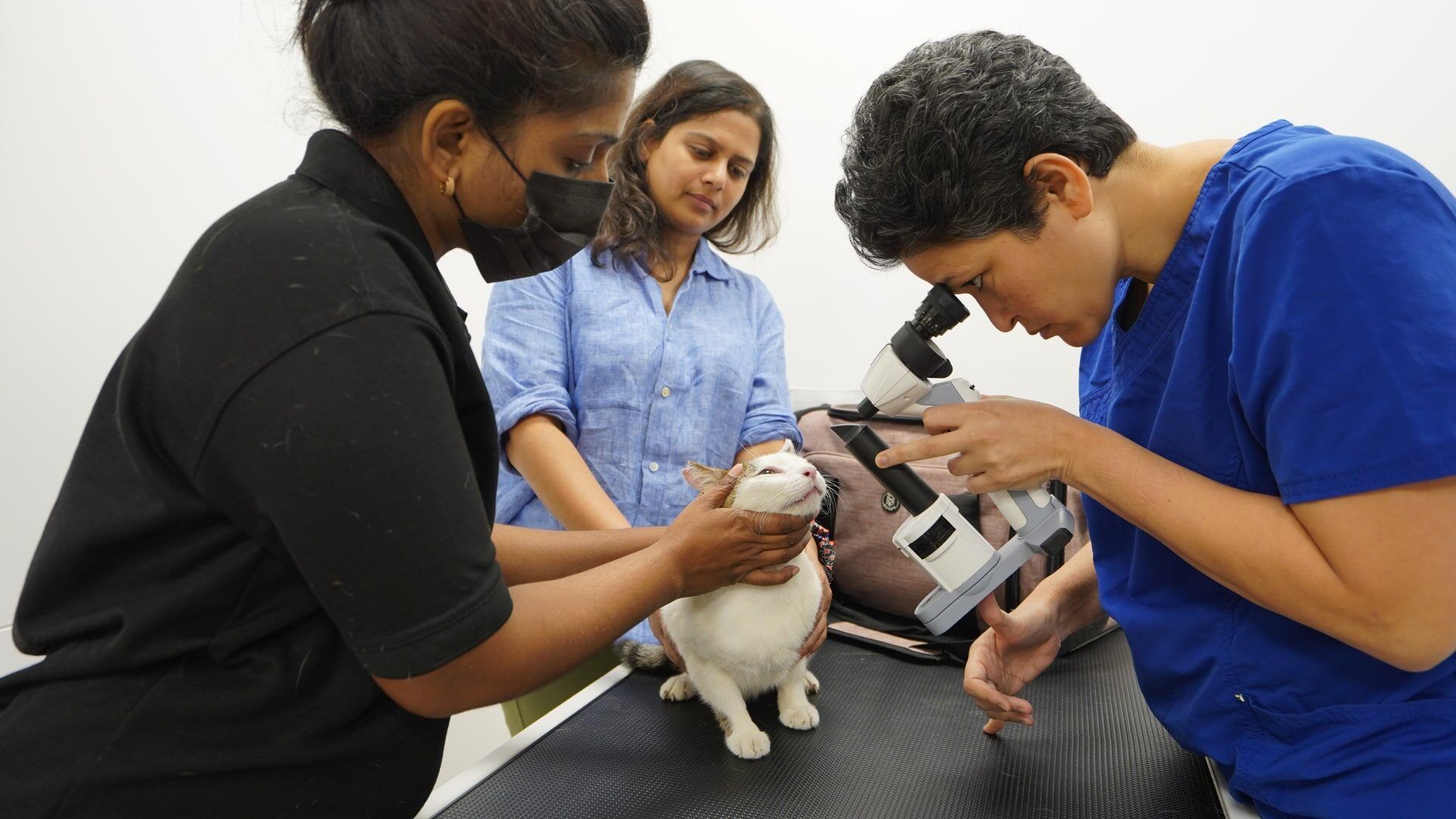
Requirements for Accreditation
Accreditation ensures that these institutions meet the highest standards in veterinary ophthalmology education and clinical training.
Faculty Qualifications
- The institution must have at least two ACVO/ECVO/IBVO board-certified veterinary ophthalmologists as supervising diplomates (SD).
- Ratios: 2 SD = Maximum 3 Residents, 3 SD = Maximum 4 Residents (Rule: Number of SDs + 1)
Infrastructure
- Well-equipped ophthalmology clinics with advanced diagnostic and surgical equipment including Direct & Binocular indirect ophthalmoscopes, Operating microscope (Must have assistant head & video recording), Slit lamp biomicroscope, Phacoemulsification unit, Electronic tonometer, Microsurgical instrument sets, Fundus & External cameras, Ocular ultrasound, Goniolens, Electroretinographic (ERG) recording unit, Microscope (for cytology)
- Adequate facilities to support clinical rotations, including outpatient and inpatient care units.
Equipment list
- Direct & Binocular indirect ophthalmoscopes
- Operating microscope (Must have assistant head & video recording)
- Slit lamp biomicroscope
- Phacoemulsification unit
- Electronic tonometer
- Microsurgical instrument sets
- Fundus & External cameras
- Ocular ultrasound
- Goniolens
- Electroretinographic (ERG) recording unit
- Microscope (for cytology)
Case minimums
The clinical case minimum requirements for pets include a detailed history, clinical examination, diagnostic test results, diagnosis, and a treatment or management plan.
Clinical Case Minimum Requirements
- Dogs 1,500 cases involving ophthalmic complaints.
- Cats 150 cases involving ophthalmic complaints.
- Horses 50 cases involving ophthalmic complaints.
- Additional Species 35 cases across at least three different species.
Surgical Case Minimum Requirements
- Lens Extractions 25 cases, including intracapsular or extracapsular procedures.
- Anterior Segment Procedures 15 cases, including corneal grafts and keratectomies.
- Adnexal Procedures 15 cases, such as eyelid reconstruction and entropion repair.
- Orbit and Globe Procedures 5 cases, including enucleation and orbitotomy.
- Nasolacrimal Procedures 5 cases, such as parotid duct transposition.
- Vision-Sparing Glaucoma Procedures 5 cases, including cycloablation and shunt placement.
For each resident, over the residency.
The faculty member must also complete the IBVO didactic curriculum and pass the IBVO certification exam in order to qualify for teaching roles in the residency program. All case documentation must be verifiable, following IBVO standards for clinical and surgical records.
Additional requirements
Clinical Case Load
A sufficient and diverse case load, including small animals, equines, and exotics, to ensure comprehensive clinical exposure for residents.
Didactic Program Delivery
Institutions must have the capability to deliver the IBVO didactic curriculum through IBVO’s Canvas Learning Management System. Institutions are required to license the didactic program from IBVO to ensure consistency and quality of educational content.
Accreditation Process
Application Submission
Interested institutions must submit an application detailing their infrastructure, faculty qualifications, and clinical capabilities.
Initial Review
The IBVO Accreditation Committee reviews the application and may request additional information or documentation.
Site Visit
A site visit by IBVO representatives is conducted to assess the institution’s facilities, case load, and educational environment.
Approval
Upon successful completion of the review and site visit, the institution is granted accreditation to operate the IBVO Residency Program.
Renewal
Accreditation is valid for a period of five years, after which a renewal process is required.
Accredited Organizations
Since 2022, the International Board of Veterinary Ophthalmology (IBVO) has piloted a structured Residency Training Program (RTP) at The Eye Vet (TEV) clinics throughout India. The first cohort for IBVO Certification took place in May 2025.